VINEGAR CELLARS OPENED - 27 September 2026

THE PRODUCTION PROCESS

Aceto Balsamico di Modena is the result of a process that takes time, respecting the traditional know-how preserved in the Production Specifications.

1

GRAPE MUST AND WINE VINEGAR

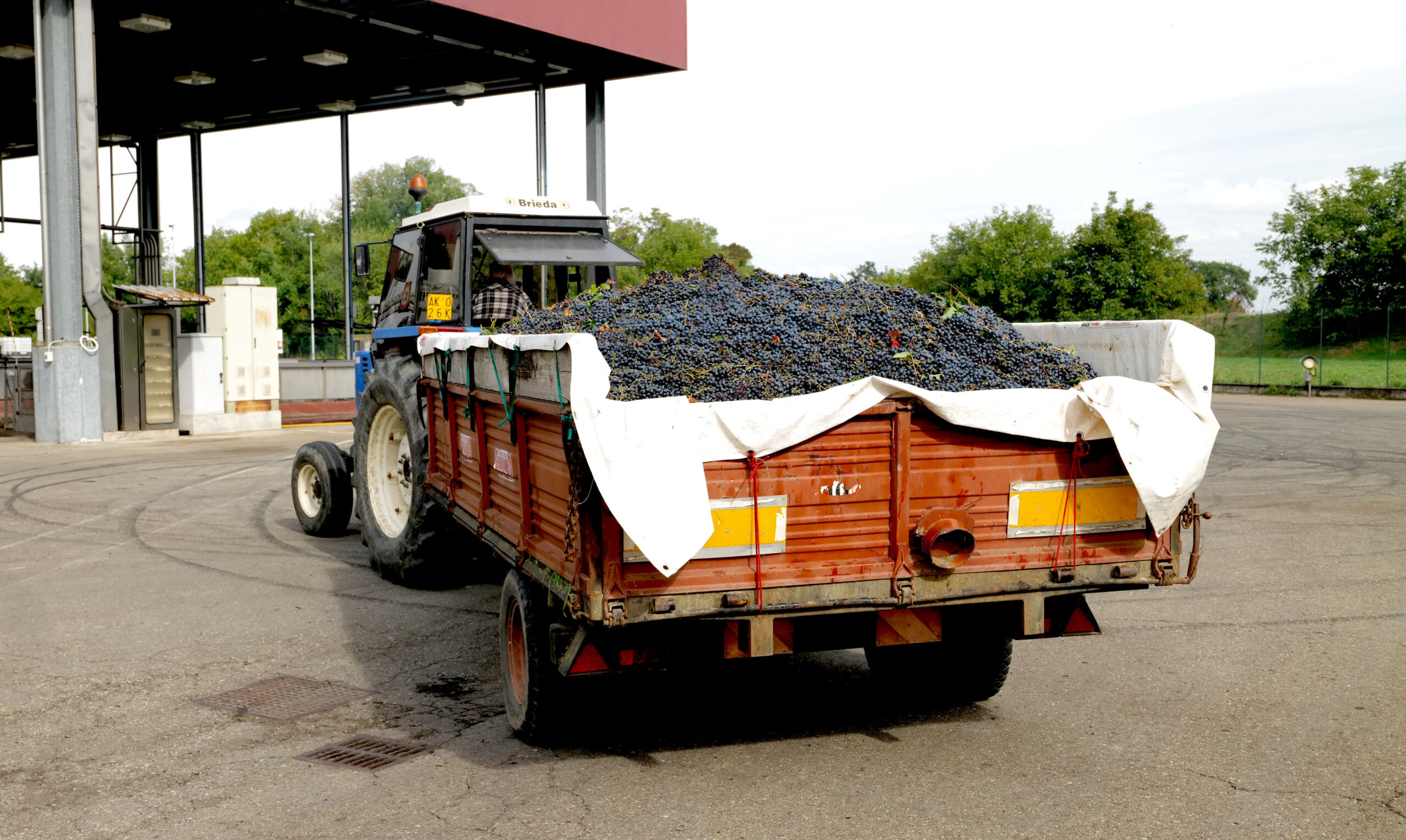
Aceto Balsamico di Modena is made by combining cooked and/or concentrated grape must with wine vinegar. The grape must is obtained exclusively from seven grape varieties:

Lambrusco

Sangiovese

Trebbiano

Albana

Ancellotta

Fortana

Montuni

Cooked and/or concentrated grape must is then blended with wine vinegar, in a minimum proportion of 10%, and a portion of vinegar aged for at least 10 years.

The minimum percentage of grape must is 20% of the total quantity of product used for processing. Concentration continues until a density of no less than 1.240 is reached at a temperature of 20°C.

The cooked and/or concentrated must must have a minimum total acidity of 8 g/kg and a minimum net dry extract of 55 g/kg.

For color stabilization, caramel may be added up to a maximum of 2% of the volume of the finished product. The addition of any other substance is prohibited.

2

ACETIFICATION AND AGING

The production of Aceto Balsamico di Modena must follow the traditional acetification process using selected bacterial cultures, or the established slow surface acetification or slow chip acetification method, followed by aging.

Aceto Balsamico di Modena is aged in casks, vats, or barrels made from fine woods such as:

Oak

Chestnut

Mulberry

Juniper

for at least 60 days, calculated from the time the blending of the raw materials is completed — mixed according to the producers’ recipes and in compliance with the Production Specifications — and the resulting mixture is sent for processing.

3

AGING

Once the 60-day aging period in wooden vats has been completed, Aceto Balsamico di Modena may undergo an additional period of aging.

If this stage lasts for more than 3 years, the finished product may be classified as “Invecchiato” (Aged); if it continues for more than 5 years, it may be labeled “Riserva.”

4

CERTIFICATION

At the end of the aging process, the product undergoes analytical and sensory examinations conducted by qualified technicians and expert tasters. Each individual batch is subject to certification, ensuring compliance with the requirements established by the Production Specifications before the product is placed on the market.

The analyses verify compliance with the required chemical and physical parameters, while the sensory examination confirms that the product exhibits the characteristic sensory properties of Aceto Balsamico di Modena IGP.

Only batches that pass all the required checks may be certified and marketed under the designation “Aceto Balsamico di Modena IGP” This control system assures consumers of the product’s authenticity and compliance with the quality standards established by the Production Specifications.

5

PACKAGING

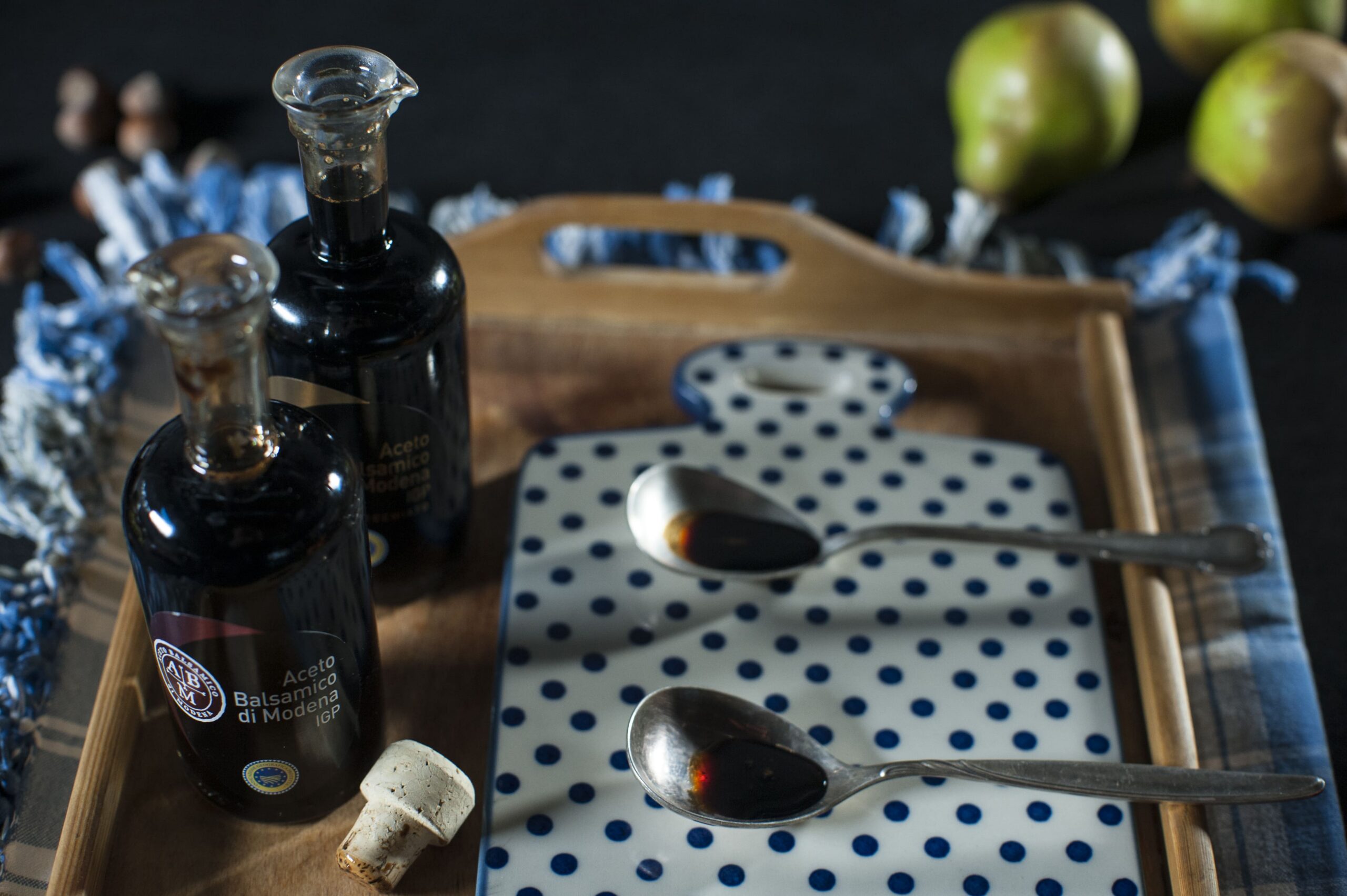
Certified Aceto Balsamico di Modena may be placed on the market for direct consumption. It is packaged in containers made of glass, wood, ceramic, or terracotta, available in various capacities:

0.100 l

0.150 l

0.200 l

0.250 l

0.375 l

0.500 l

0.750 l

1 l

1.5 l

2 l

3 l

5 l

Single-serving glass, plastic, or composite-material containers with a maximum capacity of 25 ml are also permitted. If the product is intended for professional use, glass, wood, ceramic, or terracotta containers with a minimum capacity of 5 liters are authorized, as are plastic containers with a minimum capacity of 2 liters.

Labeling

Each package must bear the designation “Aceto Balsamico di Modena” accompanied by the Protected Geographical Indication (PGI) and, where applicable, the designation “Invecchiato” (Aged) or “Riserva.”

THE PRODUCTION AREA

The Production Specifications require the blending of the raw materials, processing, aging, and/or aging in fine-wood containers to take place exclusively in the provinces of Modena and Reggio Emilia: a territorial connection that is not only geographical, but also cultural and rooted in local production.

The finished product may also be packaged outside the geographical area of origin.

HOW SHOULD IT BE STORED?

Thanks to its characteristics and the natural balance between acidity and aromatic components, Aceto Balsamico di Modena IGP is not subject to deterioration during storage and retains its sensory qualities for a long time.

For proper storage, simply keep the bottle tightly closed in a cool, dry place, away from direct sunlight and sources of heat or particularly strong odors, which could affect its characteristics.

Over time, a slight sediment may form at the bottom of the bottle. This is a natural phenomenon that does not in any way compromise the quality, safety, or authenticity of the product.

Aceto Balsamico di Modena IGP should not be refrigerated: low temperatures may alter its characteristics and structure. To fully appreciate its qualities, it should be stored and used at room temperature.